Atrial Septal Defect (ASD) Device Closure in Bengaluru
Closing a hole between the upper heart chambers with a self-expanding device delivered through a vein in the groin — no open-heart surgery, no chest scar. Under the care of Dr. Bharath A. P.
- No Chest Incision or Scar
- Echo-Guided Precision
- Usually 1–2 Day Stay
- Back to School in Days
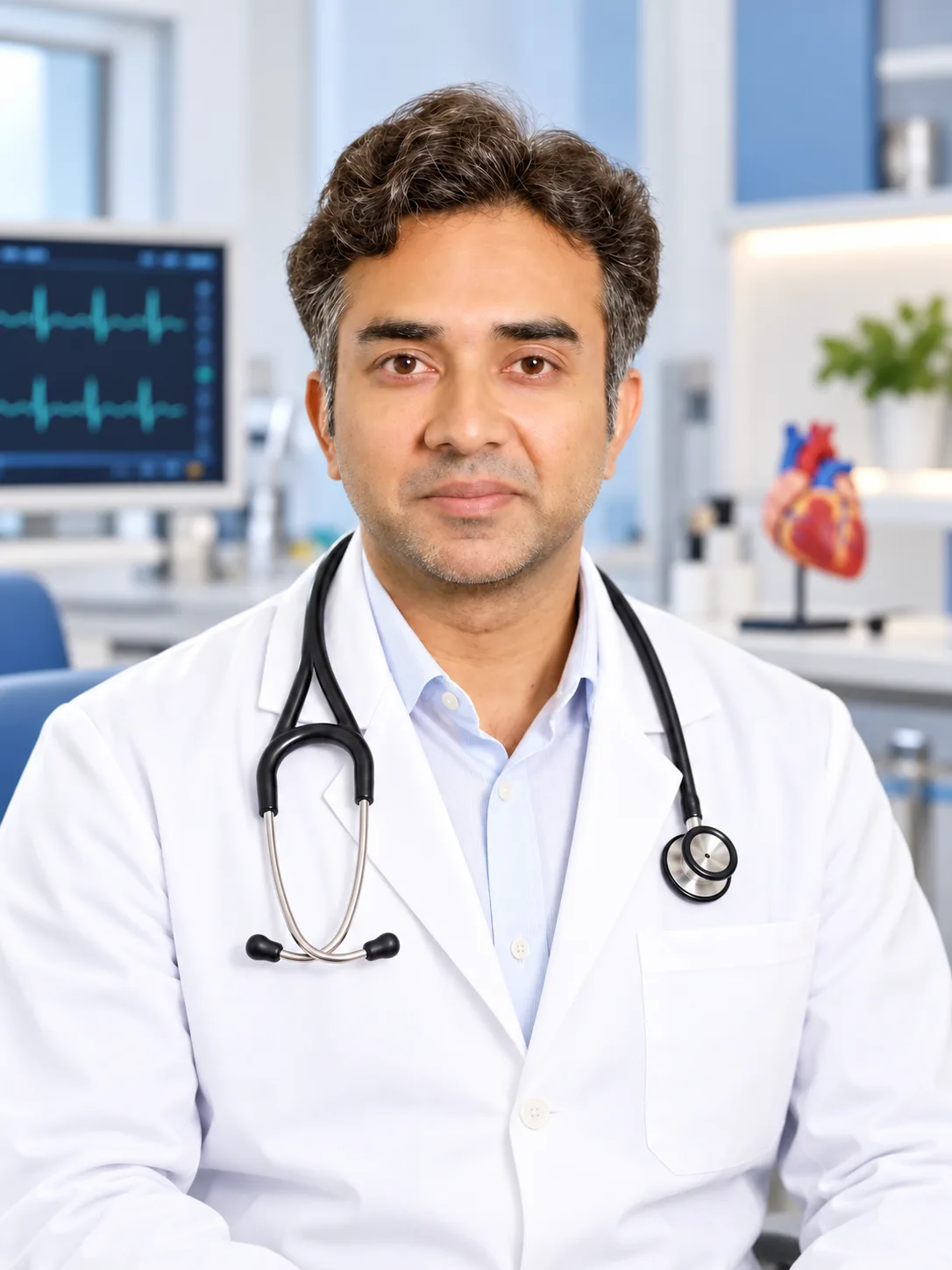
Dr. Bharath A. P.
Pediatric Interventional Cardiologist
Clinical Practice
Dedicated to newborn & child cardiac excellence
Children Evaluated
Evaluated with echocardiogram, from preterm infants to young adults
Children Operated
Cardiac interventions & cath lab procedures in children
Surgeries Coordinated
Coordinated surgical care for children with congenital heart diseases.
What Is ASD Device Closure?
An atrial septal defect (ASD) is a hole in the wall between the two upper chambers of the heart. Extra blood flows through it into the right side of the heart and lungs. A large ASD often causes no symptoms in childhood, but over years it can enlarge the right heart and lead to rhythm problems, breathlessness and pulmonary hypertension.
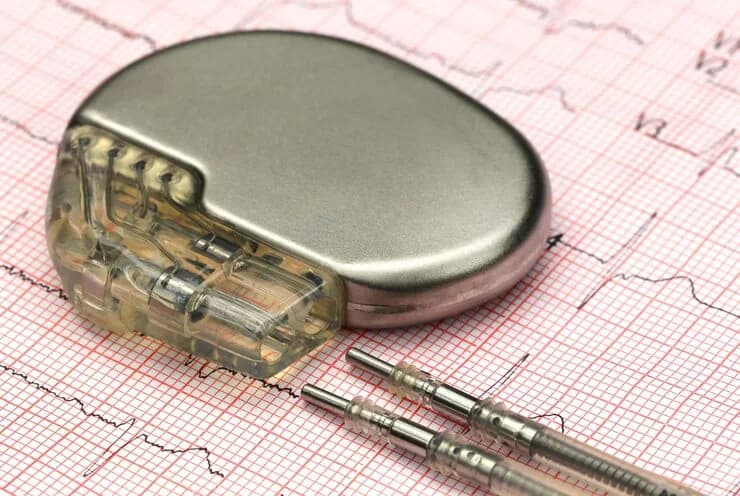
Most secundum ASDs — the commonest type — can be closed through a catheter. A double-disc device made of nitinol mesh is folded inside a thin tube, guided from a groin vein into the heart and opened across the hole. Over the following months, the heart's own lining grows over the device, sealing the defect permanently.
Suitability Check
Echo (often TEE) confirms the type, size and rims of the ASD before closure.
Precise Sizing
The defect is measured carefully so that the right device size is chosen.
Permanent Seal
Tissue grows over the device within months; it never needs to be replaced.
When Is It Recommended?
ASD device closure is recommended when:
- A secundum ASD causes right heart enlargement
- The defect has adequate tissue rims to hold a device
- The child has breathlessness, fatigue or frequent chest infections
- The defect has not closed on its own by early childhood
Not sure if your child needs this?
Share your child's reports and Dr. Bharath's team will guide you on the next step.
Conditions Covered
Heart conditions commonly assessed or treated with this service.
Secundum ASD
The commonest type and the one usually suitable for device closure.
Multiple / Fenestrated ASD
Several small holes that may be closed with one or more devices.
Patent Foramen Ovale
Closed in selected cases with specific clinical reasons.
Not Suitable for Device
Primum, sinus venosus and coronary sinus ASDs are referred for surgical repair.
How It Is Performed
What happens on the day, explained simply so you know what to expect.
- 1Step 01 / 05
Anaesthesia
Your child is put to sleep comfortably under pediatric anaesthesia.
- 2Step 02 / 05
Vein Access
A small tube is placed in the groin vein — no incision is made on the chest.
- 3Step 03 / 05
Measurement
The ASD is sized precisely using echocardiography and, if needed, a sizing balloon.
- 4Step 04 / 05
Device Deployment
The device is opened across the hole and its position checked with echo and X-ray before release.
- 5Step 05 / 05
Recovery
The catheter is removed, pressure is applied to the groin and your child wakes up.
Benefits, Risks & Care
A balanced overview, plus how to prepare and what recovery looks like.
Key Benefits
- No open-heart surgery or chest scar
- No heart-lung machine or blood transfusion usually needed
- Short hospital stay and quick return to normal life
- Excellent long-term results in suitable defects
Every child is different. Specific risks, benefits and alternatives for your child are discussed in detail during consultation.
Why Families Choose Dr. Bharath A. P.
Super-speciality training, academic experience and hands-on cath lab expertise.
National Board super-speciality fellowship at Madras Medical Mission Hospital, Chennai.
Assistant Professor of Pediatric Cardiology at Sri Jayadeva Institute of Cardiovascular Sciences and Research since 2015.
Diagnostic catheterisation and interventions including ASD, VSD and PDA closures, valvuloplasties and stenting.
Co-author of peer-reviewed articles in Heart Lung Circulation, Archives of Disease in Childhood and Annals of Pediatric Cardiology.
Frequently Asked Questions
Answers to common questions about Atrial Septal Defect (ASD) Device Closure.
At what age is ASD closure usually done?
+
Non-urgent ASDs are often closed between 2 and 5 years of age, or whenever they are diagnosed in older children. Earlier closure is considered if the child has symptoms.
Can every ASD be closed with a device?
+
No. Only secundum ASDs with enough surrounding tissue rims are suitable. Other types, such as primum and sinus venosus defects, need surgical repair.
Will the device need to be changed as my child grows?
+
No. The device is permanent. The heart's lining grows over it within a few months and the heart grows normally around it.
When can my child return to school?
+
Most children return to school within a week. Vigorous contact sports are usually avoided for a few weeks, until the follow-up echo confirms everything is stable.
Is the device safe for MRI scans and airport security?
+
Most modern ASD closure devices are MRI-conditional, meaning MRI can be done safely under specific conditions. They do not usually trigger airport metal detectors, and you will be given a device card.
What happens if the ASD is not closed?
+
A significant ASD often causes no symptoms in childhood, but over years it can enlarge the right heart and lead to rhythm problems, breathlessness and pulmonary hypertension. Timely closure prevents these complications.
Visit the Clinic
VEGA CURRE Multispeciality Clinic
2nd Floor, Shop No. 24 & 25, 3rd A Cross, Bhuvaneshwari Nagar, Dasarahalli Main Road, Hebbal Kempapura, Bengaluru – 560024