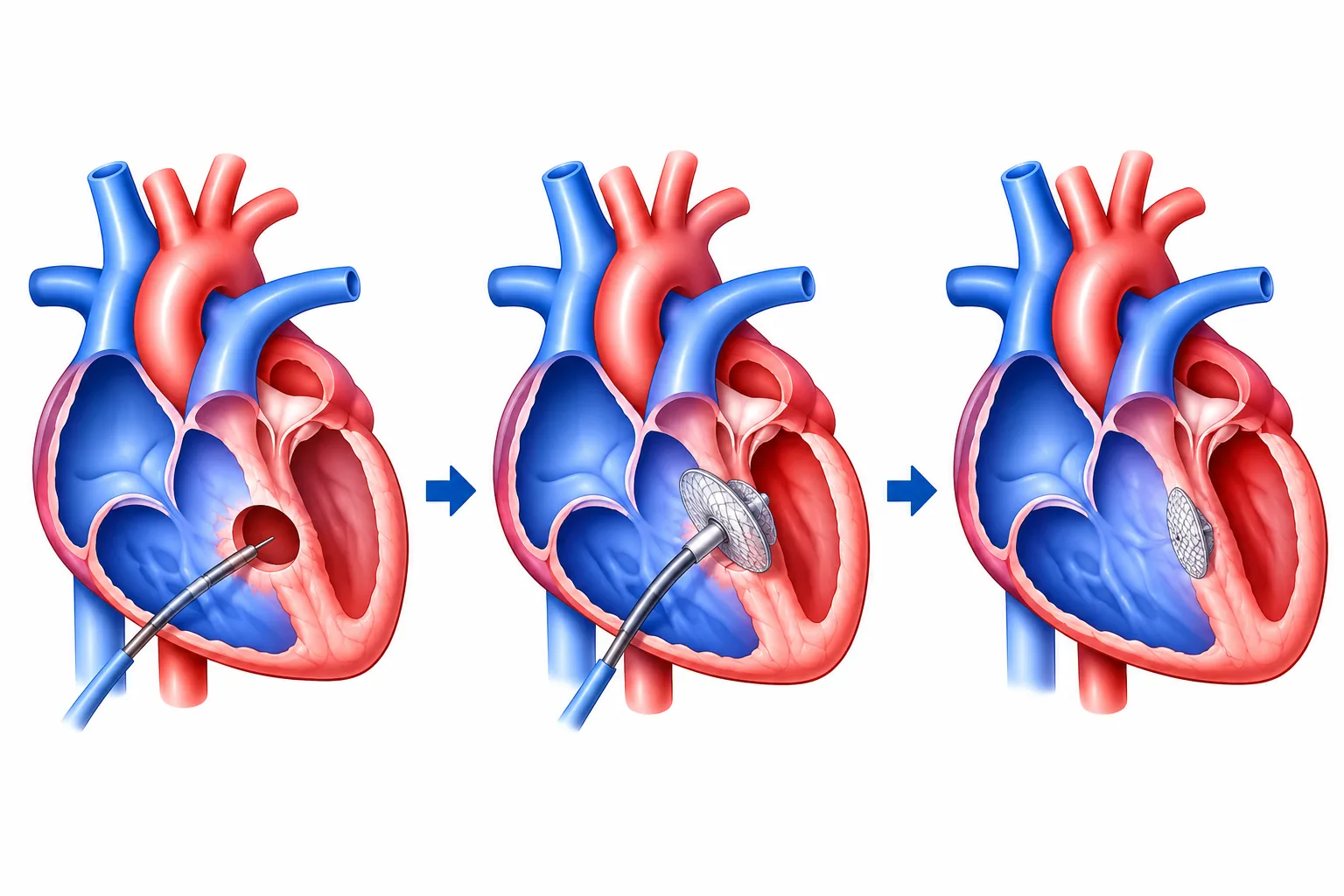
Ventricular Septal Defect (VSD) Device Closure in Bengaluru
Closing selected holes between the lower heart chambers with a catheter-delivered device, sparing suitable children from open-heart surgery. Under the care of Dr. Bharath A. P.
- Muscular & Perimembranous VSDs
- Avoids Heart-Lung Machine
- Careful Patient Selection
- Short Hospital Stay
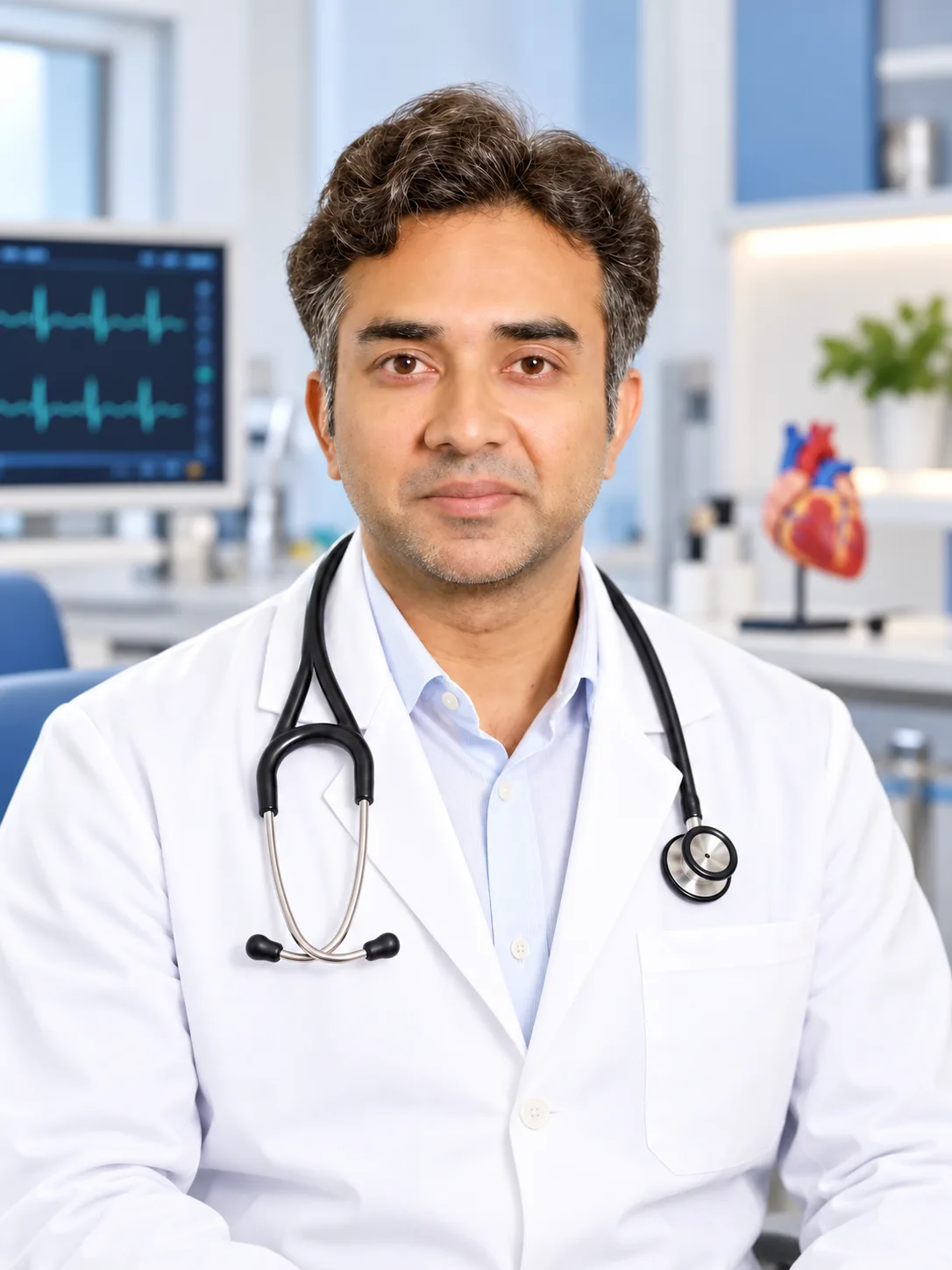
Dr. Bharath A. P.
Pediatric Interventional Cardiologist
Clinical Practice
Dedicated to newborn & child cardiac excellence
Children Evaluated
Evaluated with echocardiogram, from preterm infants to young adults
Children Operated
Cardiac interventions & cath lab procedures in children
Surgeries Coordinated
Coordinated surgical care for children with congenital heart diseases.
What Is VSD Device Closure?
A ventricular septal defect (VSD) is a hole in the wall between the two lower pumping chambers. Small VSDs often close on their own, but moderate and large ones can overload the heart and lungs, causing breathlessness, poor weight gain and, if untreated, pulmonary hypertension.
In selected children, a VSD can be closed through a catheter using a specially designed device. The device is delivered from the groin vessels, positioned across the hole under X-ray and echo guidance, and released once it is stable. Careful selection is essential, because VSDs sit close to the heart's electrical system and the aortic valve.
Selective Approach
Location, size, distance from valves and the child's weight determine suitability.
Valve Protection
Echo monitoring ensures the aortic and tricuspid valves are not affected.
Rhythm Safety
Heart rhythm is monitored closely during and after the procedure.
When Is It Recommended?
VSD device closure may be considered when:
- The VSD enlarges the left side of the heart
- The child has symptoms or poor weight gain from the shunt
- The defect is muscular or a suitable perimembranous VSD
- There is adequate distance from the aortic valve
Not sure if your child needs this?
Share your child's reports and Dr. Bharath's team will guide you on the next step.
Conditions Covered
Heart conditions commonly assessed or treated with this service.
Muscular VSD
Defects in the muscular septum, often well suited to device closure.
Perimembranous VSD
Selected defects with suitable anatomy and margins.
Residual Post-Surgical VSD
Leaks remaining around a surgical patch.
Not Suitable for Device
Very large defects in small infants or those close to valves are referred for surgery.
How It Is Performed
What happens on the day, explained simply so you know what to expect.
- 1Step 01 / 05
Anaesthesia
A pediatric anaesthetist puts your child to sleep and monitors heart rhythm throughout.
- 2Step 02 / 05
Vessel Access
Catheters are introduced via the groin artery and vein.
- 3Step 03 / 05
Defect Assessment
Angiography and echo define the exact size and position of the VSD.
- 4Step 04 / 05
Device Placement
The device is positioned across the defect and valve function and rhythm are checked before release.
- 5Step 05 / 05
Monitoring
Your child is observed with rhythm monitoring before discharge.
Benefits, Risks & Care
A balanced overview, plus how to prepare and what recovery looks like.
Key Benefits
- Avoids open-heart surgery and heart-lung bypass
- No chest scar
- Faster recovery and shorter hospital stay
- Good results in carefully selected defects
Every child is different. Specific risks, benefits and alternatives for your child are discussed in detail during consultation.
Why Families Choose Dr. Bharath A. P.
Super-speciality training, academic experience and hands-on cath lab expertise.
National Board super-speciality fellowship at Madras Medical Mission Hospital, Chennai.
Assistant Professor of Pediatric Cardiology at Sri Jayadeva Institute of Cardiovascular Sciences and Research since 2015.
Diagnostic catheterisation and interventions including ASD, VSD and PDA closures, valvuloplasties and stenting.
Co-author of peer-reviewed articles in Heart Lung Circulation, Archives of Disease in Childhood and Annals of Pediatric Cardiology.
Frequently Asked Questions
Answers to common questions about Ventricular Septal Defect (VSD) Device Closure.
Can all VSDs be closed without surgery?
+
No. Suitability depends on the location and size of the VSD, the child's weight and the distance from the heart valves. Many VSDs are still best closed surgically, and Dr. Bharath will advise the safest option.
What is heart block and how common is it?
+
Heart block is a disturbance of the heart's electrical conduction. It is an uncommon but important risk after perimembranous VSD closure, which is why careful selection and follow-up ECGs are part of the plan.
My child's VSD is small. Does it need closure?
+
Usually not. Small VSDs that do not enlarge the heart often close on their own or remain harmless, and only need periodic check-ups.
How long is the follow-up after VSD device closure?
+
Check-ups with ECG and echo are scheduled at regular intervals in the first year and then periodically, to make sure the rhythm and valves remain normal.
How long does my child stay in hospital after VSD device closure?
+
Most children stay 2 to 3 days so that heart rhythm and the device position can be checked before discharge.
What are the alternatives if device closure is not suitable?
+
Surgical closure with a patch is the standard alternative and has excellent results. Dr. Bharath will explain which option is safest for your child's VSD.
Visit the Clinic
VEGA CURRE Multispeciality Clinic
2nd Floor, Shop No. 24 & 25, 3rd A Cross, Bhuvaneshwari Nagar, Dasarahalli Main Road, Hebbal Kempapura, Bengaluru – 560024